



It’s much harder being a senior woman leader in India, says Ipsita Dasgupta of HP
In our Women in Tech series, we profile Ipsita Dasgupta, Senior Vice President & Managing Director, HP India, Bangladesh, and Sri Lanka, who talks about navigating diverse roles and why advocacy is more important than mentorship.

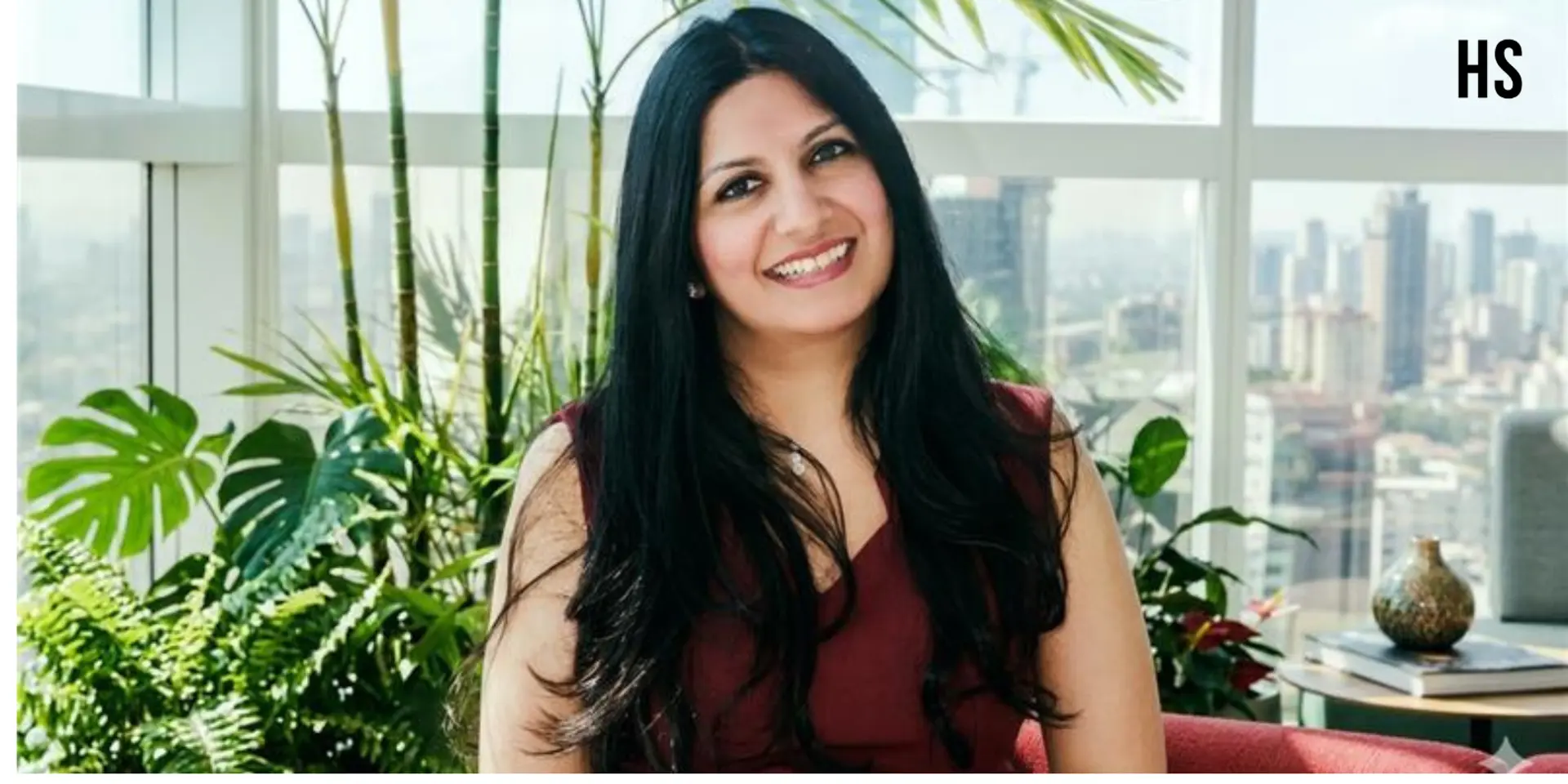

There is a question Ipsita Dasgupta asks herself every time a new opportunity lands on her desk: Does accepting this give her a knot in the stomach? If the answer is no, it’s probably not worth it.
“Whenever I’ve been asked to take on a role and had deep conversations with the people I’ll be working with, I’ve asked myself, ‘What will success look like in this role?’ and then said, ‘The rest I’ll figure out once I’m in it,’” she says.
It’s this mindset that has helped her navigate multi-billion-dollar businesses across companies like IBM, Cisco, GE, Apple, and Star (Disney), before stepping into her current role as Senior Vice President & Managing Director–HP India, Bangladesh, and Sri Lanka.
A career built on curiosity
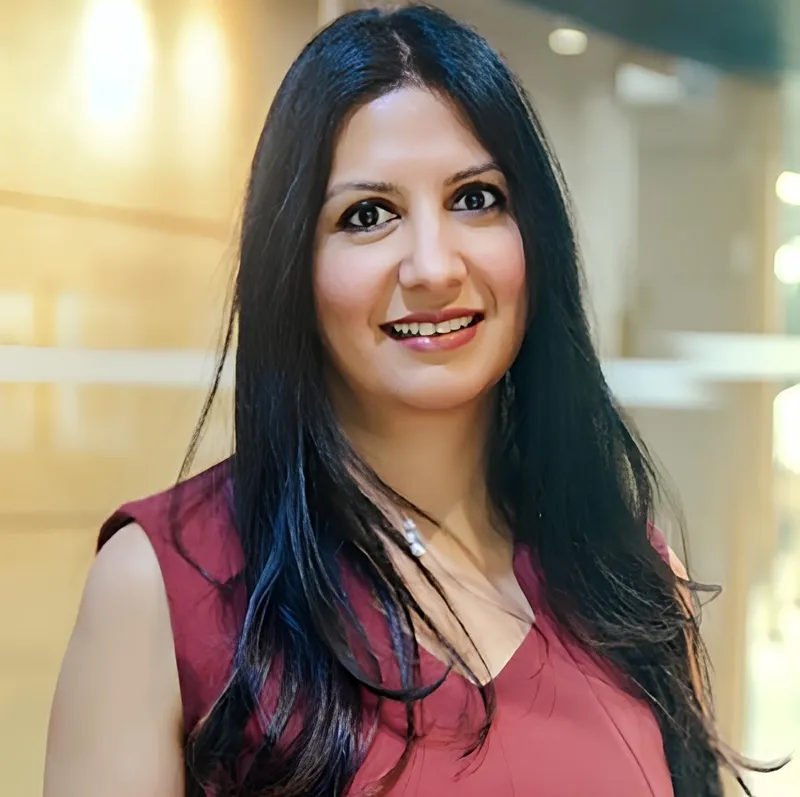
Ipsita Dasgupta
Dasgupta’s father worked for Energizer, and the family moved around the world, but she spent most of her time in the US. Her mother was a human rights lawyer, and this meant that nearly every dinner-table conversation revolved around ideas about how the world should look.
Dasgupta began her studies at Columbia University as an astrophysics major, but she fell in love with developmental economics after hearing economist and Nobel laureate Amartya Sen speak.
After completing her degree in pure mathematics and economics, she enrolled at Harvard Business School, where she met her husband.
They got married, and he joined Goldman Sachs, while Dasgupta joined IBM.
From there, began a rather unique and varied career—Cisco, then GE, Star-Disney, Apple, and now HP. She has a clear thought line to explain the progression and diversity: dynamic, growth, and emerging markets.
“If you look outside my window in Mumbai, the building I live in is in a neighbourhood that didn't even exist when I first moved here. That pace —that rate of change—is what keeps me excited,” she says.
She sought out markets like India, China, the Middle East, and Southeast Asia, places where growth was visible, almost tactile. “I prefer to be in a learning phase all the time,” she says simply.
In an enviable career trajectory across geographies, Dasgupta reveals that she has never pursued a role in her life, not looked at a company, but largely bet on and followed people.
The story of how she joined GE illustrates this. John Flannery, who would later become GE's CEO, spotted her at the Yale CEO Summit and spent 13 months asking her to join.
“Roles and companies never are what you imagine them to be when you are on the outside. They are just a recipe for disappointment if you factor something like that in. But if you understand your chemistry with a person and where they are going, if you feel you can complement it and learn from it, then that's the perfect recipe for growth.”
The move to Star (then owned by 21st Century Fox, later acquired by Disney) tested this differently. Media tycoon Uday Shankar wanted her to build subscription businesses and run sports leagues. By her own admission, Dasgupta doesn’t enjoy sports and has spent her career selling gas turbines and aircraft engines.
“He said: What I do makes 800 to 900 million people’s moods in this country every single day. And it suddenly struck me—what a big impact media makes,” she recalls.
She became one of the only women running sports leagues in India, a world where she was, as she puts it, “usually the only woman in the room. ”You figure your way in,” she adds.
Dasgupta joined HP through an executive search firm tasked with finding a candidate who could triple the business, which was already one of the top MNCs in India.
She took the job two-and-a-half years ago and runs the full profit-and-loss strategy for the business and holds overall responsibility as a country leader for a workforce of approximately 24,000 people, including contract workers.
“I do everything from driving our manufacturing strategy and working with the government on anything that the government requires us to work on, as well as our sales organisation and our marketing organisation,” she explains. All decisions that need to be made around the entities that exist in India, the whole gamut from a business perspective,” she elaborates.
Having spent close to two decades at the intersection of technology and business, what has changed for women and what hasn’t?
“If you look at the US and China, there are many more women in senior-level positions, but India has a longer path to go. It’s much harder being a senior woman leader in India,” she admits.
She attributes the “missing middle”—Indian women dropping out of the workforce mid-career—to having the largest number of stakeholders in their lives—in-laws, uncles and aunts, cousins, and neighbours, all with opinions on their choices.
“In a world where representation is still largely male, it becomes harder and harder for women to be able to make tradeoffs and decisions about what they want to do and how they want to do it,” she points out.
She often tells women that if they want their personal lives to make space for their careers, they must also allow their careers to shape their personal lives.
“What I mean by this is that you will see if a woman’s salary is needed in a family, people are much less disruptive of her career and work,” she says.
Advocacy over mentorship
Dasgupta does not believe in mentorship, but in advocacy and sponsorship. To her, mentorship, as is typically practised, is advice-giving. Advocacy is when someone in a room where you are not says your name in the right context, defends you, and puts your name forward for opportunities before you even know they exist.
“When people come to me and ask,” Will you be my mentor? And I don't know them, my immediate response is: you don't want me as a mentor. Because I won't advocate for you in rooms you are not in. What you want are people who know your work—and they happen when you deliver for those people,” she says.
She also adds that she doesn’t see enough of the desire to pay it forward.
“There aren’t enough women’s networks or forums. Women keep a lot to themselves. They feel proud that they've said nothing, done nothing, and stayed in the box. And yet that's not the way the world works,” she explains.
When women see other women lead with conviction, it quietly reshapes what feels possible. Dasgupta believes that representation becomes powerful when it is paired with examples. When a senior woman not only says, “Have a point of view. Don’t worry about being liked or judged. Take risks,” but lives those choices every day, other women begin to recognise their own capacity to step forward, speak up, and take chances.
For a woman without a plan but always looking for challenges, the next five years will keep her busy.
“I see myself as a mother to 16-year-old twins, which I hope is not going to be as painful as it is for some people,” she laughs.
“The best way to keep me busy is to give me complex problems to think about or solve. I am sure I will have a multi-faceted life,” she adds.
Edited by Megha Reddy